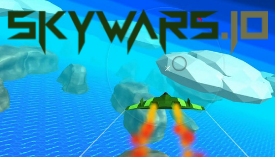
Core Flight Mechanics
Controlling your aircraft relies on straightforward mouse or touch inputs. A primary action, such as a click or tap, activates your plane's main tool to interact with opponents. Directional keys or on-screen controls let you perform rolls and turns to avoid incoming threats. The design emphasizes ease of use so you can concentrate on the competition rather than complex button combinations.
Strategic Positioning
Success depends on reading the sky and predicting where opponents will move. You must constantly assess your altitude, speed, and angle relative to others. The open water below serves as both a beautiful backdrop and a clear boundary for the playing field. Using clouds or the horizon to mask your approach can give you a crucial advantage.
Multiplayer Dynamics
Matches pit you against several other pilots in a free-for-all format. Each round requires you to balance offense with self-preservation. You may choose to engage aggressively or hang back and let others eliminate each other. A radar or visual cues help you locate nearby aircraft, but you must decide when to act on that information.
Visual Atmosphere
The game presents a clean, immersive view of the sky and ocean. Sunlight reflects off the water, and clouds drift across your path. This setting creates a sense of scale and freedom, while the consistent ocean surface helps you maintain spatial awareness. The visuals support the gameplay without overwhelming it.
Practice and Improvement
Mastering the controls takes time. You can improve by learning how opponents tend to move and by refining your own timing. Regular practice helps you develop a feel for the aircraft's handling. Patience often pays off: waiting for the right moment to act can be more effective than rushing into every encounter.







Comments
0 comments