Core Gameplay Loop
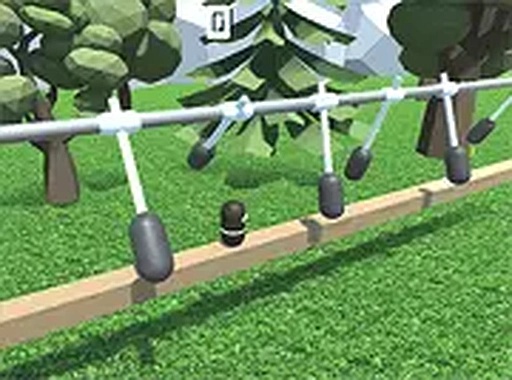
Players direct a character through a sequence of barriers that appear along a set path. The primary action involves pressing a key or clicking a mouse at the correct moment to avoid contact with each obstacle. Success depends entirely on the player's ability to read the speed and spacing of upcoming hazards. There is no complex story or inventory to manage; the focus remains on the moment-to-moment challenge of moving from one safe spot to the next.
Obstacle Patterns & Variation
The barriers are not random. They follow repeating patterns that become familiar after repeated attempts. Some obstacles move quickly, while others shift slowly or appear in groups. This design encourages players to learn each sequence rather than rely on raw speed alone. The variety keeps the experience fresh without introducing confusing rules or sudden changes.
Progression & Reward System
Advancement is tied directly to performance. Clearing a set number of obstacles without failing moves the player closer to the final prize: the red belt. This belt represents a high level of skill and dedication. There are no purchasable upgrades or shortcuts. Progress is earned purely through practice and improved coordination.
Visual Style & Audio Feedback
The game uses a clean, uncluttered visual style that makes obstacles easy to see against the background. Each successful dodge and each collision triggers a simple sound effect, providing clear feedback. This audio cue helps players understand their timing without needing to look away from the action. The overall presentation is functional and designed to support the core gameplay.
Platform & Control Optimization
Stealth Sprint: Precision Course is built for desktop browsers. It responds best to keyboard inputs or mouse clicks. A full-screen mode is available to remove on-screen distractions. The controls are intentionally simple, allowing players to focus entirely on the timing of their actions. This makes the game accessible to newcomers while still offering depth for experienced players.
Learning Curve & Replay Value
The difficulty increases gradually as players demonstrate their ability. Early sections serve as a tutorial for basic timing, while later sections require faster reactions and better pattern recognition. Because each run is short, players can quickly retry after a mistake. This loop of attempt, failure, and improvement creates a natural incentive to keep playing and refine one's skills.




Comments
0 comments